 Place
Open Now
Place
Open Now
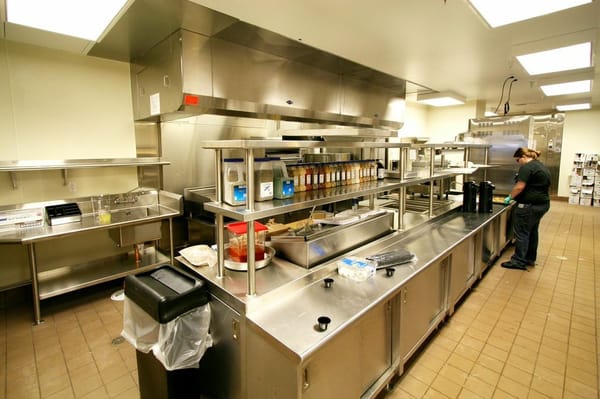
Do not come here if you have service dog. They will not be allowed off time.(edit: here definition being able to greet people or have time to decompress with other patients present) Wasn't told til three weeks in and now have to comply or lose access to care. Have experienced harassment and discrimination ongoing being told to just focus on my recovery. Curbing three weeks worth of schedule with my service dog because I am in refeeding and have a feeding tube. I have comply with whatever they say now or id be homeless. No religious accommodation set up for muslims unless you ask and educate them. Edit: they finally kept my door open on residential but no where to pray on php. Bugs in food have happened while I was here and hair. Edit: mold in food Lastly in three weeks no seizure protocols. Theyre supposed to take vitals every 5-10 mins and 30 after. My dog has been overworked due to lack of support during seizures. No fire alarm protocols for those who need them. Edit: they suddenly started to do precautions but had a paper that was incorrect on facts about the seizures "eyes are normally open in pnes" which is not factually accurate... Edit: it is not an allergen free facility. Patients are being forced to quit program on attendance not being on time for php meanwhile these patients have adhd. Jewish patients were favorably treated towards the end of my stay on residential. Kosher is provided but lack of halal options or pork checks on gelatin. There have also been complaints to doh with doh failing to investigate; hippa violations, allergy concerns, ADA not being respected for those with neuro divergence or wheelchair accommodations such as push buttons for doors....
I originally wrote a review of ERC when I was 14 years old and still extremely sick, angry, and traumatized. Now nearly four years later, I want to share a more reflective and honest perspective on my experience. I will say this clearly: ERC saved my life physically. When I was admitted, I was severely medically unwell, and forced recovery including being tube fed was necessary for me to survive. Without that intervention, I could have died. For that, I am grateful. However, saving someone’s life does not excuse unsafe practices, dishonesty, or emotional harm. Looking back the negatives of this program still outweigh the positives. Pros: -ERC stabilized me physically and prevented me from dying. -There was a significant amount of school time. -The other patients I met were some of the most genuine and meaningful connections I have ever had. - PHP was noticeably better than residential Cons: - Poor quality and repetitive therapy: Therapy felt shallow and repetitive, often consisting of the same worksheets over and over with little individualized care. Some patients barely saw their individual therapists during long stays. - Unsafe and unqualified staffing: Many staff members were college students with minimal training in eating disorders or trauma care. There were frequent snarky remarks, inappropriate comments, denial of medications, and long periods where patients were left unattended. - Medical mistakes and dishonesty: There were serious medical errors. Untrained college students were allowed to manage NG tubes without proper supervision, and I personally had my feed set up incorrectly, causing it to spill onto my clothes. In another case, two patients tube feeds were switched, a dangerous mistake that was not disclosed to the patient or parents until a nurse accidentally admitted it. ERC also misrepresents expectations for length of stay, telling families treatment lasts 6–8 weeks when during my five months in residential and additional time in PHP I only saw that happen once. I also witnessed patients being kicked out for minor issues like grabbing paper from a teacher or refusing group therapy, including one patient discharged the day before their planned release. When this happens, insurance stops covering care and they have to pay out of pocket. ERC is money hungry and knows what they are doing. - Punishment based system When problems occurred, the main response was punishment removal of writing utensils, fidgets, or outside breaks. This only worsened power struggles between staff and patients and did not address underlying issues. -Bullying There was intense drama between patients and staff. Patients largely hated the staff, and staff often seemed to dislike the patients in return. Bullying among patients was common and poorly handled. Cliques formed, and some patients were targeted or ostracized for saying something triggering. Many of us were young, desperate to belong, and emotionally fragile, and this environment made things worse. It has been four years since I was admitted, and I still think about this experience regularly. I still struggle with my eating disorder, and I would not consider myself fully recovered. What keeps me from ever returning to the level of illness I was at is not hope or positivity, it is fear. I am terrified of ever having to experience treatment like this again. I have noticed this pattern in many former patients I’ve spoken to. Recovery is driven not by feeling supported, but by fear of being sent back. That is not a healthy or sustainable foundation for healing. ERC is better than no treatment at all if someone is severely ill and at risk of dying. In that sense, it can be life saving. But parents and patients deserve to know that this program can also leave lasting emotional scars. If you send your child here, they will not forget it. This experience stays with you. - P.P. Alpha male -P.P. Schemck -P.P. Freakazoid If any patient I met while i stayed there is reading this i love you and never stop being yourself
ERC saved my life when I thought nothing could. The bad reviews are mostly from the child/adolescent floor, which I have heard is a lot more strict and restrictive than the adult floor. I can’t speak on that because I only went to the adult residential/PHP/IOP. Now for the review. Adult res genuinely saved my life. I have ARFID and felt I was too far gone to recover. The MC’s and providers at ERC changed my mind. Food wise, they provided me with the very few foods I am able to eat. They would even go to the store and buy the specific brands I like. They found a way to fit all food groups into my meals, and by the end of my treatment I was surprisingly able to eat everything on my plate. I credit the therapy and exposures for this. Therapy wise, I appreciated the style they went about this. You have an individual therapist and also group therapy. The groups were one of the most beneficial parts of my treatment. I may have gotten lucky with my milieu but there is encouragement without pressure to share and show vulnerability. There is also a curriculum teaching about distress tolerance skills, DBT/CBT/ACT, etc. The skills I learned have been incredibly helpful. If you ever meet Dana, Kartyre, Dr. Seely, Greta, Emily, or Tim, it would benefit you to talk to them. They are the people that got me through treatment. I couldn’t ask for a better team. ERC if you are seeing this I would appreciate you letting these staff members know that they saved my life. If you are over 18 and have ARFID I would recommend ERC Bellevue.